Haghpat Monastery in Late May: Dark Stone, Green Hills and a Boy with a Fish
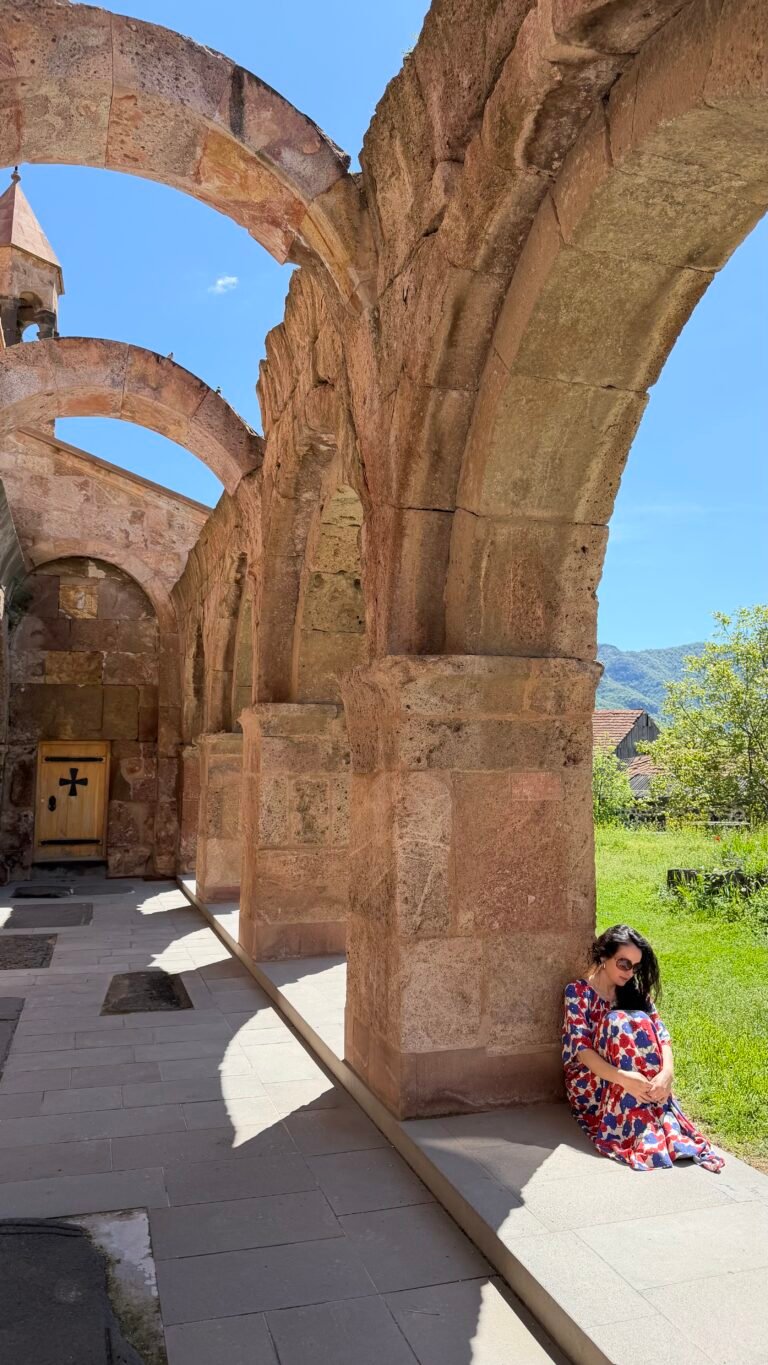
I went to Haghpat at the end of May, on a warm, sunny day with a beautiful blue sky and white curly clouds. The colour I remember most is green. The grass was so fresh that the old stone looked almost black against it, and beyond the roofs the hills opened out under all that sky. When I think back to that day, the landscape takes up as much room in my memory as the monastery itself.
Haghpat stands on high ground above the town of Alaverdi and the Debed gorge in Lori, the province of northern Armenia where I live. Together with nearby Sanahin, it is a UNESCO World Heritage site. For a first visit, it helps to know that this is not one church but a whole group of buildings, each with its own purpose.
Haghpat at a glance
- Where: Haghpat village above Alaverdi, Lori province, an easy day trip from Vanadzor by car.
- Founded: around 976 by Queen Khosrovanuysh; the main church was completed in 991.
- UNESCO: World Heritage site, listed together with Sanahin.
- Entry: free. Candles are sold inside the church.
- What to wear: Haghpat is still a place of worship. Cover your shoulders; men take off hats inside.
A monastery built over three centuries
Queen Khosrovanuysh, wife of King Ashot III, founded Haghpat around 976. Its main church, Surb Nshan (Holy Sign), was completed in 991 under her son, King Smbat II. Walk round to the east side and look up at the gable: a stone relief shows her two sons, Smbat and Gurgen, holding a small model of the church between them.
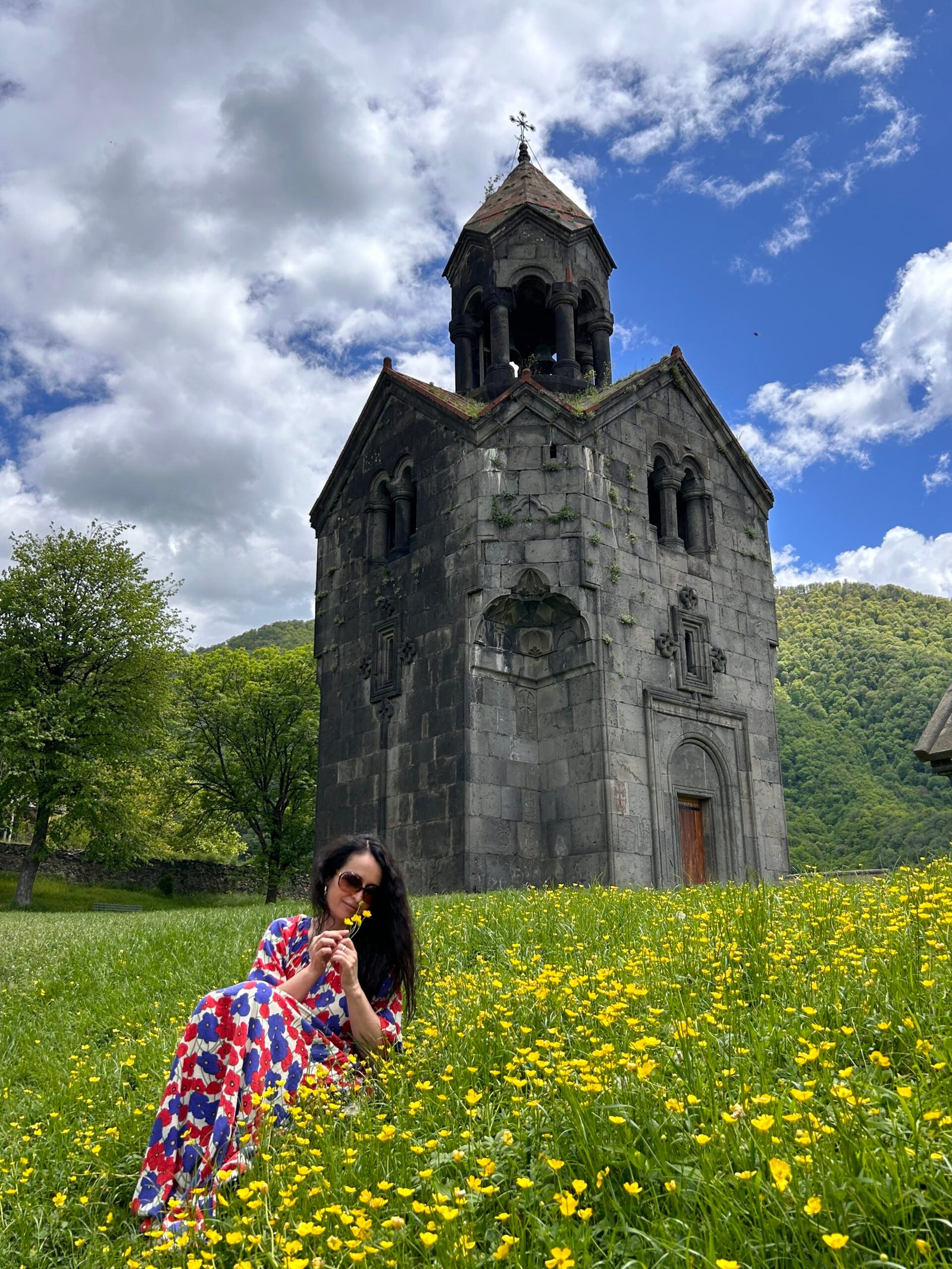
The monastery kept growing long after that. The free-standing bell tower dates from 1245, and its shape changes as it rises: a cross-shaped lower storey, an eight-sided storey above it and an open belfry on columns at the top. It is easier to understand if you look at one level at a time. In late May the grass around it was full of yellow buttercups, and that is where my favourite photograph from the day was taken.
Look out, too, for the All-Saviour khachkar (Amenaprkich) of 1273. Most Armenian cross-stones are carved with an ornamental cross; this one shows the Crucifixion itself, and it is the oldest known khachkar of its kind.
There was also a scriptorium where manuscripts were made, a refectory for shared meals, and a thirteenth-century library that was later turned into a storeroom, with large clay jars set into its floor. A plan of the complex helps here: work out which room you are standing in before moving on. Knowing what a space was for makes its shape easier to understand.
Leave room for the hillside
If you take photographs, take at least one with plenty of landscape around the roofs. In May the green is part of how the buildings look: it makes the dark stone darker. Crop it away and you lose the contrast that caught my eye. A close-up of a doorway or an arch tells you about the stonework; the wide view tells you where you are.
Around the same time I also visited Odzun, on the other side of the Debed gorge, and I remember its stone as much lighter. If you can see both, the contrast shows how different the churches of one province can be.
A boy carrying a fish
My favourite Haghpat story survives in a book rather than in stone. The Haghpat Gospel of 1211, decorated by the artist Margare and now kept at the Matenadaran in Yerevan as manuscript 6288, has a boy named Sheranik in the margin of one of its canon tables, carrying a fish. Beside him, the artist wrote a request: bring a fish whenever you come.
Canon tables are the decorated pages at the start of a Gospel book that line up matching passages from the four Gospels. Elsewhere in the same manuscript, a musician sits under a pomegranate tree.
Sheranik is the detail I would keep in mind in Haghpat’s old scriptorium. Next to all the queens, kings and builders, here is one real boy and one very human request. The historian Karen Matevosyan’s study of Armenian manuscript art reproduces these pages, so you can meet Sheranik before you go.
Practical notes
- Getting there: I went with a local driver from Vanadzor, which is the easiest way to see Haghpat and Odzun in one day. Without a car, take a minibus (marshrutka) to Alaverdi and a taxi up to the village.
- Combining sites: Sanahin is close by and Odzun is across the gorge, so the three make a good day in Lori.
- A stop for gata: Zarni-Parni, a cave complex with a small tavern near Haghpat, is where I had the gata in my article about this Armenian pastry.
Questions people ask about Haghpat
Is Haghpat free to visit?
Yes, there is no entrance fee. Candles are sold inside the church if you would like to light one.
What should I wear?
Haghpat is still a place of worship of the Armenian Apostolic Church. over your shoulders and avoid very short shorts; men take off hats inside. Women can bring a light scarf, though visitors are not usually asked to cover their heads.
How do I get there without a car?
Take a minibus to Alaverdi, then a taxi up to Haghpat village. If you can, hire a car with a local driver: that makes it easy to add Odzun on the same day.